
Unlocking Deep Truths: Mastering the Doctrinal/Theological Bible Study Method
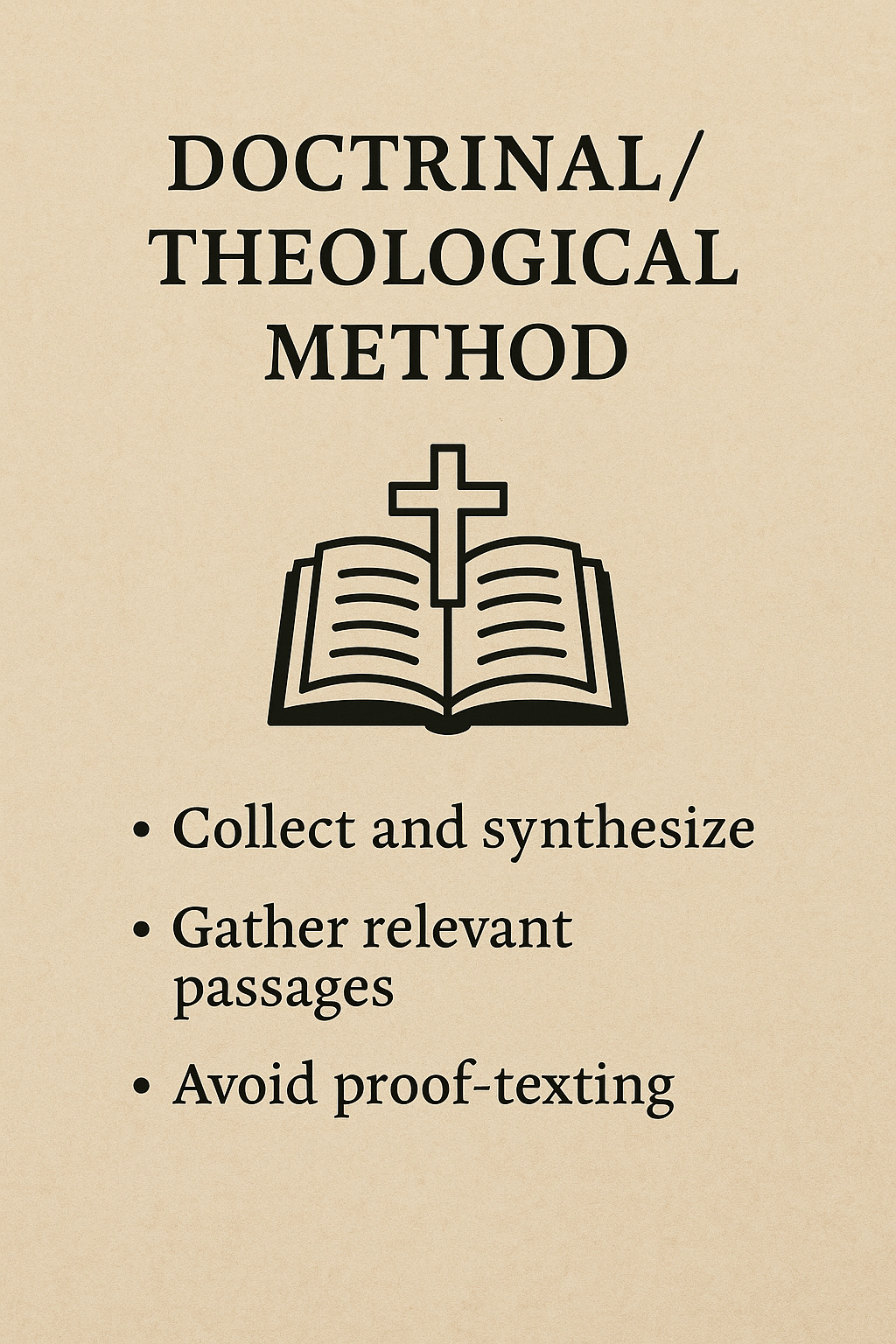
The Doctrinal–Theological Bible Study method focuses on identifying and organizing biblical teachings about God, humanity, salvation, and other core truths across Scripture. It emphasizes drawing systematic, theologically consistent conclusions by comparing related passages to form clear doctrinal understanding.
Dan Burnfield
7/27/20253 min read
Introduction
What if you could systematically explore the Bible’s most profound doctrines—like salvation, the Trinity, or the end times—and build a rock-solid theological foundation? The Doctrinal/Theological Method of Bible study makes this possible. Unlike verse-by-verse or topical approaches, this method dives deep into core Christian doctrines, synthesizing Scripture’s teachings into a unified, coherent whole. Whether you’re a theology student, pastor, or curious believer, this approach transforms abstract concepts into life-shaping truth.
What Is the Doctrinal/Theological Method?
This deductive approach starts with a specific doctrine (e.g., "salvation," "the Trinity," or "the church") and systematically gathers all relevant biblical passages to construct a comprehensive understanding. It answers questions like:
What does the Bible really teach about sin?
How is the Trinity revealed across Scripture?
What is the biblical view of heaven and hell?
The goal isn’t just knowledge—it’s doctrinal clarity, guarding against error and grounding faith in God’s unchanging truth.
Why This Method Matters
Guards Against Heresy: In a world of theological confusion, this method anchors you in biblical orthodoxy.
Builds Confidence: Know why you believe what you believe (1 Peter 3:15).
Unifies Scripture: Shows how diverse passages converge on core truths (e.g., Isaiah 53 and Romans 3:23–26 on atonement).
Equips for Ministry: Essential for teaching, counseling, and evangelism (2 Timothy 3:16–17).
“Theology is the scaffold that holds the house of faith together. Without it, we build on sand.”
Step-by-Step Guide: How to Practice the Doctrinal/Theological Method
Step 1: Choose a Doctrine & Outline Key Categories
Start with a clear doctrinal focus. Break it into sub-themes for structured study.
Example: Studying Soteriology (Salvation)
Doctrine
Key Categories
Soteriology
1. Human Sin (Rom 3:23; 1 John 1:8)
2. God’s Grace (Eph 2:8–9)
3. Christ’s Atonement (Isa 53:5; 1 Pet 2:24)
4. Faith & Repentance (Acts 3:19; Rom 10:9)
5. Eternal Security (John 10:28; Rom 8:38–39)
Step 2: Gather Scripture Using Key Tools
Leverage resources to find every relevant passage:
Concordances: Strong’s Exhaustive Concordance (for word studies like “justification” or “redemption”).
Topical Bibles: Nave’s Topical Bible or The Treasury of Scripture Knowledge.
Digital Tools: Logos Bible Software, BlueLetterBible.org, or BibleGateway.com (search by keyword or theme).
Commentaries: Use trusted sources (e.g., Matthew Henry for devotional insights; Baker Exegetical for depth).
Pro Tip: Cross-reference translations (ESV, NASB, NIV) to capture nuances.
Step 3: Organize Passages into Logical Categories
Group verses by theme to see the Bible’s unified teaching.
Example: The Doctrine of Sin
Category
Key Passages
Origin of Sin
Genesis 3; Romans 5:12
Nature of Sin
Psalm 51:5; Jeremiah 17:9; Mark 7:21–23
Consequences
Romans 6:23; Ezekiel 18:20
Solution
Romans 3:21–26; 1 John 1:9
Step 4: Synthesize a Coherent Biblical View
Analyze your findings to answer:
What is the core biblical teaching?
Are there apparent tensions? (e.g., divine sovereignty vs. human responsibility in salvation).
How does this doctrine point to Christ? (Luke 24:27).
Avoid Pitfalls:
Don’t force verses to fit preconceived ideas.
Let clear passages interpret ambiguous ones (Scripture interprets Scripture).
Real-Life Example: Studying the Trinity
Doctrine Focus: The Trinity—One God in Three Persons.
Outline Categories:
God’s Oneness (Deut 6:4; 1 Cor 8:6).
Distinct Persons: Father (John 6:27), Son (John 1:1–14), Spirit (Acts 5:3–4).
Unity in Action (Gen 1:26; Matt 28:19; 2 Cor 13:14).
Gather Passages:
Old Testament hints (Gen 1:26; Isa 48:16).
New Testament revelation (Matt 3:16–17; John 14:16–17).
Synthesize:
The Father, Son, and Spirit are co-equal, co-eternal, yet distinct (John 10:30; 14:9–11).
Practical application: Worship all Three Persons (Rev 1:4–6).
Benefits & Challenges
Benefits:
Depth Over Breadth: Master complex doctrines.
Apologetics Power: Defend faith with clarity (Jude 1:3).
Personal Transformation: Doctrine fuels worship (Rom 11:33–36).
Challenges & Solutions:
Challenge
Solution
Information Overload
Focus on one sub-doctrine at a time.
Interpretation Bias
Pray for the Spirit’s guidance (John 16:13); consult diverse scholars.
Application Gaps
Ask: “How does this truth transform my life?” (James 1:22).
Tools to Elevate Your Study
Print Resources:
Systematic Theology by Wayne Grudem (accessible).
Biblical Doctrine by John MacArthur (detailed).
Digital Aids:
Logos Bible Software (doctrinal libraries).
BlueLetterBible.org (free lexicons and commentaries).
Community: Join a theology study group for accountability.
Conclusion: Doctrine as Fuel for Worship
The Doctrinal/Theological Method isn’t academic gymnastics—it’s a journey into the heart of God. When Paul urged Timothy to “guard the good deposit” (2 Tim 1:14), he was championing this very approach: know the truth, organize it, live it.
Your Next Step: Pick one doctrine—start small (e.g., prayer, grace, or angels). Use the steps above, and let Scripture shape your mind, heart, and mission. As you do, you’ll discover what the Puritans knew: “Theology is for doxology. The truest learning is worship.”
“Sound doctrine isn’t a cage for the mind—it’s wings for the soul.”
Try it today: Study salvation using this method. Note how Ephesians 2:8–9, Romans 10:9–10, and Titus 3:5–7 weave together a tapestry of grace. Then ask: How does this truth ignite my awe for God?